
Sailing holiday guide
A practical guide to planning a pet-friendly yacht charter, from life jackets and seasickness to toilet routines, shade, documents and choosing the right boat.
For those of us who consider pets part of the family, leaving them behind is not always the easiest option. And honestly, sometimes it is not even the nicest one.
A pet-friendly sailing holiday can be a beautiful way to travel together: no crowded hotel corridors, no daily change of accommodation, no long hours away from each other. Just the sea, a slower rhythm, and a boat that becomes your floating home for a few days.
Of course, sailing with pets requires a little more planning. Dogs and cats do not experience a boat the way we do, so comfort, safety and routine matter more than ever.
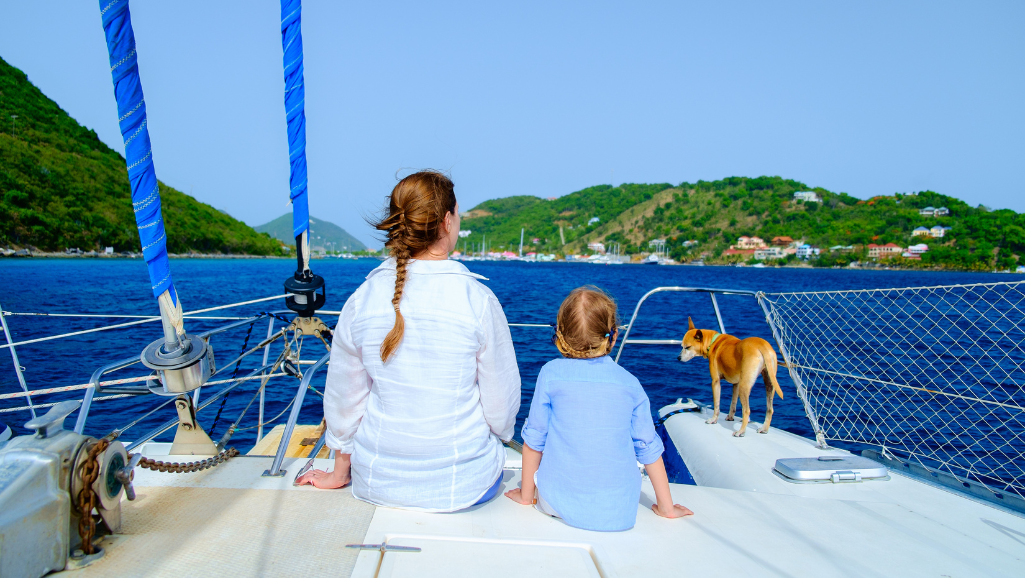
Pet-friendly travel is no longer a niche. In Europe, recent industry data shows that almost one in two households owns at least one pet, which explains why more travellers are looking for holidays where dogs and cats are welcome too.
A yacht charter can work surprisingly well for pet owners, especially when compared with more traditional types of travel. Once your pet has adapted to the boat, the environment is often calmer than a hotel or resort: fewer crowds, fewer strangers, and a clear routine that repeats every day.
The real advantage
For many pets, the biggest benefit is not the destination. It is staying close to their people. A sailing holiday avoids the stress of boarding kennels or pet sitters and keeps the family group together throughout the trip.
This does not mean every pet will immediately love the sea. Some will settle in quickly, others will need more time. The secret is to prepare them before departure, not once you are already at anchor.
Dogs and cats can have very different reactions to the boating environment. Some dogs love water and movement. Others become nervous as soon as the floor starts moving. Cats are usually more cautious, but some adapt beautifully once they understand where they can hide, rest and observe.
Before booking a longer sailing holiday with your pet, try a gradual approach:
A pet that has already heard halyards clinking, engines starting and waves hitting the hull will usually feel much safer once the real holiday begins.
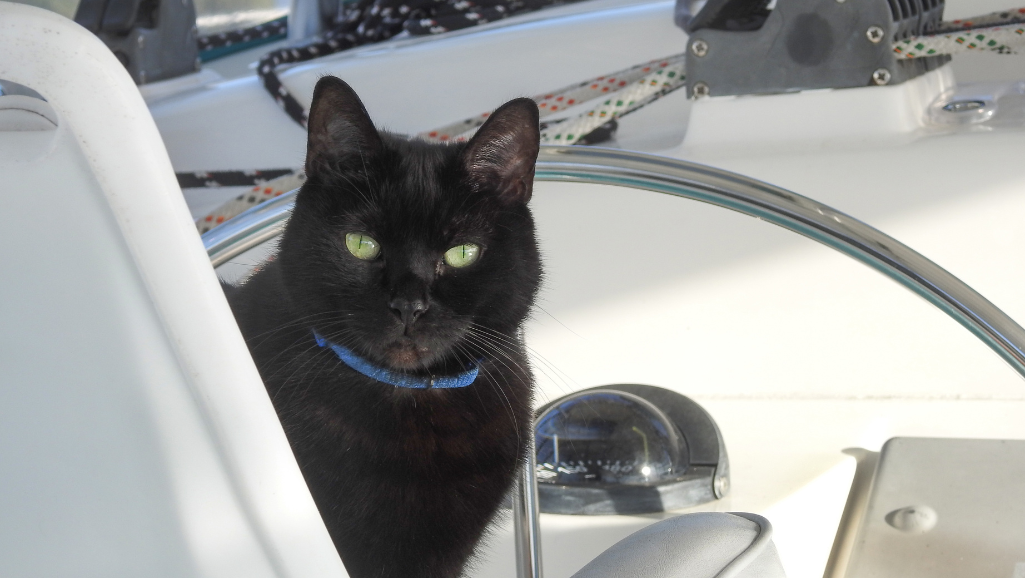
Packing for a pet on a boat is a little different from packing for a normal trip. You are not just bringing food and a leash; you are creating a small, familiar world inside a completely new environment.
The bed or blanket is more important than it looks. Familiar smell helps pets understand that the boat is not just a strange place, but a safe place where they can relax.
Pets are usually very good at finding the corner where they feel most comfortable. Let them choose, then make that spot work better for them.
A good pet corner should be shaded, quiet, easy to reach and away from busy manoeuvring areas. Place their bed there, keep water nearby and avoid moving their things around too much during the week.
A useful onboard trick: avoid placing your pet’s bed in a spot that looks comfortable at anchor but becomes slippery or exposed while sailing. The best place is often low, shaded and protected from sudden movement.
Cats may move more often during the day, especially to follow shade or find cooler surfaces. Dogs usually prefer staying close to their owners, particularly during the first hours of navigation.
Even if your dog can swim, a life jacket is essential on board. Falling into the sea from a boat is different from jumping into calm water from a beach. There may be waves, wind, panic, distance from the stern, or difficulty lifting the animal back on board.
Choose a pet life jacket with:
The inside of a boat can also be slippery. A few non-slip mats in strategic areas can help pets move around with more confidence, especially when the boat is heeling or when the deck is wet.
During docking, anchoring and harbour manoeuvres, pets should always be supervised or kept in a safe area. These are the moments when people are busy, lines are moving, and small distractions can become risky.
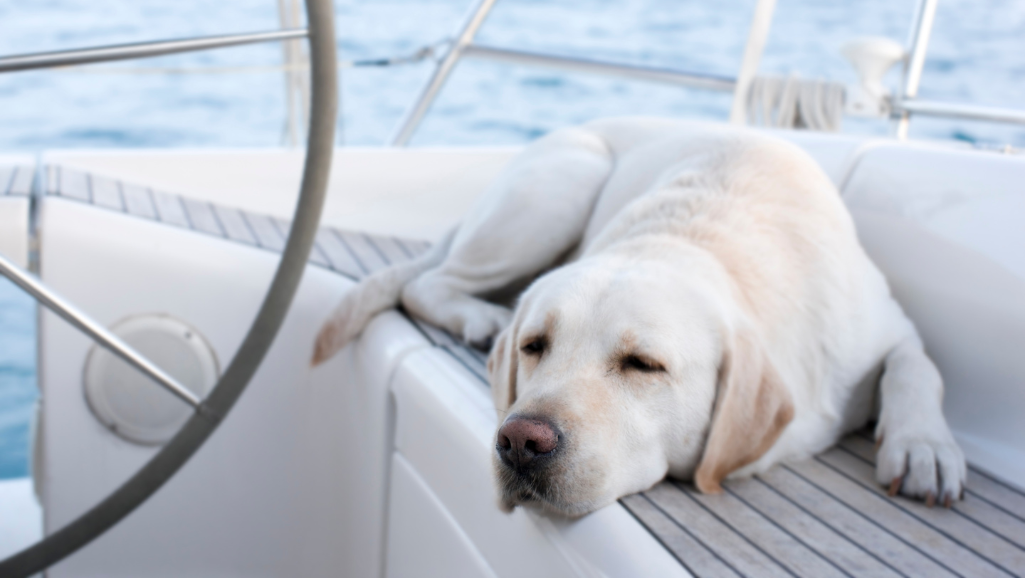
This is one of the most practical questions pet owners ask before a boat holiday: where will my pet go to the toilet?
For dogs, a piece of synthetic grass can work well as an onboard toilet area, but it should be introduced before the trip. Do not expect your dog to understand it for the first time while already at sea.
For cats, a litter tray is usually easier, but placement matters. Keep it stable, accessible and away from food and water.
Plan your itinerary around your pet too
If your dog is used to regular walks, choose an itinerary with short sailing legs and daily stops ashore. A beautiful route is not truly comfortable if it ignores the rhythm of the animal on board.
Pets can suffer from seasickness, especially during the first hours or first day on board. Symptoms can include drooling, restlessness, yawning, vomiting, loss of appetite or unusual tiredness.
Before departure, speak with your vet about motion sickness medication and dosage. Never give human medication to a pet unless your vet has specifically recommended it.
A simple way to reduce stress is to keep the first day gentle. Avoid planning the longest crossing immediately after check-in. Let your pet understand the boat, the sounds and the movement before asking too much from them.
Sun exposure on a boat can be stronger than expected because light reflects off the sea and deck. Pets may not realise they are overheating until they are already uncomfortable.
Fresh water should always be available, and shaded areas are non-negotiable. Dogs cool themselves mainly through panting, so excessive panting, weakness or confusion should be taken seriously.
For some dogs, a small splash pool or a quick swim near the boat can become one of the best parts of the holiday. Just make sure the area is safe and that getting back on board is easy.
If your sailing holiday stays within one country, the process is usually simpler. If you cross borders, requirements may change depending on the destination.
Before departure, check whether you need:
This is especially important if you are planning a sailing itinerary that moves between countries, islands or territories with different import regulations.
Both sailing boats and catamarans can work for a pet-friendly holiday, but the right choice depends on your animal’s personality and your travel style.
A catamaran offers more stability, more outdoor space and wider living areas. This can be helpful for dogs, families and pets that need a little more room to move around.
The reduced heeling can also make the first sailing experience feel less intimidating for animals that are sensitive to movement.
A sailing boat can still be a great option, especially for smaller pets or experienced owners who prefer a more classic sailing experience.
The key is to create safe, non-slip areas and choose an itinerary with manageable distances between stops.
In summary
With the right preparation, a safe onboard space, enough shade, proper documents and a realistic itinerary, your dog or cat can enjoy life at sea as much as you do.
The best sailing holidays are the ones where everyone on board feels relaxed — including the smallest crew member.

€ 4,040
price of the whole boat

€ 2,240
price of the whole boat

€ 1,658
price of the whole boat

€ 4,760
price of the whole boat

€ 5,355
price of the whole boat

€ 2,975
price of the whole boat

€ 2,480
price of the whole boat

€ 2,635
price of the whole boat
Our regular email newsletters include information about our boats, holiday ideas, destination insights and cultural briefings. You can unsubscribe at any time and we'll treat your data with respect, never passing on your details to third parties. Find full details of our data management in our Privacy policy page
By signing up, I agree to Master Yachting's T&C's and Privacy policy

Looking for inspiration for your next sailing holiday? Packed with insights on trending sailing destinations plus stories from expert sailors and first-timers, our brand new digital magazine - Magister Navis - will guide your way to your next sail.
View magazine

